☰ Cards, readings & spreads

The Minor Arcana: 4 suits and all 56 card meanings
Where the Major Arcana is read for broad themes, such as change or responsibility, a Minor Arcana card brings the discussion to a particular feeling, decision, task, or exchange. Its suit identifies the area of life; its rank helps distinguish the situation or approach. Use the suit table and rank grid to compare these relationships rather than memorize isolated definitions.
How the 56 cards are built
Each of the four suits—Wands, Cups, Swords, and Pentacles—contains fourteen cards built on the same framework. Ace through Ten form the numbered sequence, with the Ace counted among the numbered cards rather than the court. Page, Knight, Queen, and King complete each suit as its court cards. Across the suits, that gives you 40 numbered cards and 16 court cards: a structure you can navigate by suit vertically or compare by rank horizontally in the grid.
Read a suit as the field of experience and a rank as a pattern to investigate within it, not a formula that replaces the individual card. For example, Pentacles concerns Earth and material life, while the Fives here share difficulty and a no verdict. The Five of Pentacles is read as hardship, exclusion, or lack: material difficulty rather than the competition associated with the Five of Wands. The combination helps you frame a question about resources or access.
The four suits
A dominant suit in a spread gives you a useful starting point for deciding what kind of question to ask. Fire directs attention toward action and creative drive; Water toward feelings, relationships, and intuition. Air brings thought, conflict, and truth into focus, while Earth concerns work, money, and material conditions. Treat that emphasis as a reading lens, not a forecast: many Cups might invite closer attention to emotional exchange, but they do not establish what another person feels.
| Suit | Element | Covers | Playing cards | Yes · No · Unclear |
|---|---|---|---|---|
| Wands | Fire | action, drive and creative energy | Clubs | 10 yes2 no2 unclear |
| Cups | Water | emotion, relationship and intuition | Hearts | 10 yes4 no0 unclear |
| Swords | Air | thought, conflict and truth | Spades | 5 yes7 no2 unclear |
| Pentacles | Earth | money, work and the material world | Diamonds | 10 yes1 no3 unclear |
Rank by rank, across the suits
Each row holds one rank in all four suits, with the card's first upright keyword and its verdict. Reading across a row shows what the number does; reading down a column shows the suit.
| Rank | WandsFire | CupsWater | SwordsAir | PentaclesEarth |
|---|---|---|---|---|
| AcesAcross the Aces, beginnings take the form of impulse, feeling, clarity, or resources; all four read as yes here. | 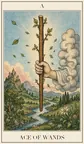 Ace of WandssparkYes | 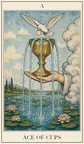 Ace of Cupsnew feelingYes | 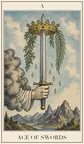 Ace of SwordsclarityYes | 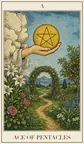 Ace of PentaclesopportunityYes |
| TwosWith the Twos, planning and partnership sit beside stalemate and juggling; their mixed verdicts resist a single rule about balance. | 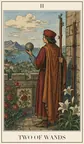 Two of WandsplanningYes | 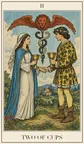 Two of Cupsmutual attractionYes | 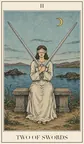 Two of SwordsstalemateNo | 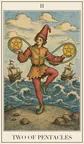 Two of PentaclesjugglingUnclear |
| ThreesAmong the Threes, expansion, community, and collaboration contrast with heartbreak; shared rank does not guarantee a shared verdict. | 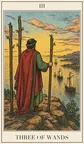 Three of WandsexpansionYes | 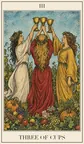 Three of CupsfriendshipYes | 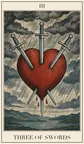 Three of SwordsheartbreakNo | 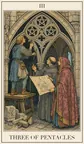 Three of PentaclescraftYes |
| FoursThe Fours range from celebration to withdrawal, recovery, and control; settling into a position can look very different across suits. | 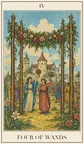 Four of WandscelebrationYes | 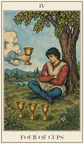 Four of CupsapathyNo | 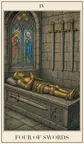 Four of SwordsrestUnclear | 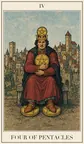 Four of Pentaclesholding onUnclear |
| FivesFriction, grief, costly conflict, and material hardship connect the Fives; all four read as no here, without predicting loss. | 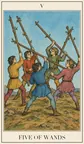 Five of WandsfrictionNo | 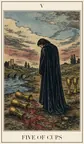 Five of CupsgriefNo | 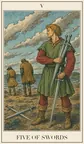 Five of Swordshollow victoryNo | 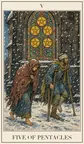 Five of PentacleshardshipNo |
| SixesRecognition, nostalgia, transition, and generosity distinguish the Sixes; all four read as yes here, but describe different grounds for that reading. |  Six of WandsrecognitionYes |  Six of CupsnostalgiaYes |  Six of SwordstransitionYes | 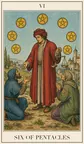 Six of PentaclesgenerosityYes |
| SevensDefending, choosing, strategizing, and assessing characterize the Sevens; their no or unclear verdicts call for examining the situation rather than assuming progress. | 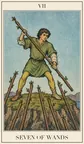 Seven of WandsdefendingUnclear | 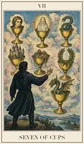 Seven of Cupstoo many optionsNo | 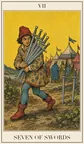 Seven of SwordsdeceptionNo | 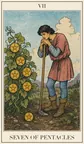 Seven of PentaclespatienceUnclear |
| EightsSpeed and practice contrast with departure and paralysis among the Eights; movement is not shared equally across these cards. | 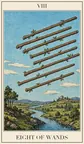 Eight of WandsspeedYes | 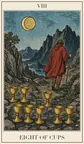 Eight of Cupswalking awayNo | 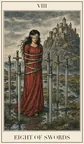 Eight of Swordsfeeling trappedNo | 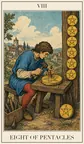 Eight of PentaclesdiligenceYes |
| NinesResilience and anxiety sit alongside satisfaction and independence in the Nines; nearing the sequence’s end is not automatically read as fulfillment. | 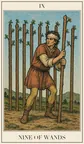 Nine of WandsresilienceUnclear | 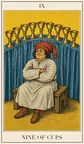 Nine of CupssatisfactionYes | 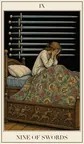 Nine of SwordsanxietyNo | 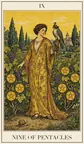 Nine of PentaclesindependenceYes |
| TensAt the Tens, burden and definite ending contrast with harmony and legacy; the sequence closes without a uniform positive verdict. | 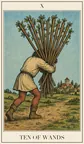 Ten of WandsburdenNo | 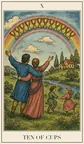 Ten of CupsharmonyYes | 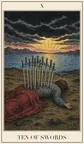 Ten of Swordsrock bottomNo | 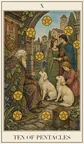 Ten of PentacleslegacyYes |
| PagesCuriosity, tenderness, watchfulness, and study shape the Pages; each reads as yes here except the Page of Swords, which reads as unclear. |  Page of WandscuriosityYes |  Page of CupstendernessYes |  Page of SwordscuriosityUnclear | 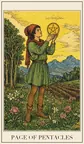 Page of PentaclesstudyingYes |
| KnightsAction links the Knights, whether bold, romantic, direct, or methodical; all four read as yes here without endorsing every approach. | 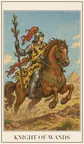 Knight of WandsactionYes | 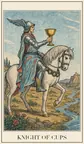 Knight of CupsromanceYes | 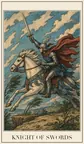 Knight of Swordsdecisive actionYes | 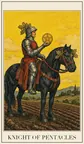 Knight of PentaclesreliabilityYes |
| QueensWarmth, empathy, clear judgment, and practical care distinguish the Queens; all four read as yes here, each with a different emphasis. | 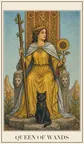 Queen of WandswarmthYes | 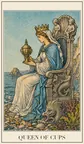 Queen of CupsempathyYes | 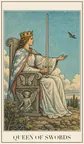 Queen of Swordsclear judgementYes | 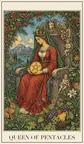 Queen of Pentaclespractical careYes |
| KingsLeadership, emotional steadiness, logical authority, and material mastery characterize the Kings; all four read as yes here, not as guarantees of success. |  King of WandsvisionYes |  King of Cupsemotional controlYes |  King of SwordsauthorityYes | 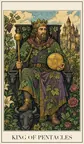 King of Pentaclesmaterial masteryYes |
All three upright and three reversed keywords for every suit card: the full list of 78.
Court cards: people or approaches
Court cards can be read as people involved in a situation or as approaches you or someone else might take. A Page suggests an exploratory stance, a Knight an active one, a Queen a way of exercising discernment or care, and a King a way of directing or managing. The suit makes those broad distinctions more specific. Before assigning a card to someone, ask whether it describes their behavior in this situation; rank need not dictate age, gender, or social status.
Questions about the Minor Arcana
How many Minor Arcana cards are there?
There are 56 Minor Arcana cards in a standard 78-card tarot deck; the other 22 belong to the Major Arcana. Those 56 cards are divided equally among four suits. Each suit contains fourteen cards, including its numbered sequence and court.
What is the difference between the Major and Minor Arcana?
The practical difference is how you organize the reading: Major Arcana cards are approached as broad themes, while suit cards give you a recurring framework of domains and ranks. “Minor” does not make a difficult conversation or a financial concern unimportant. In a mixed spread, you can read the broad theme alongside the specific circumstances rather than treating either group as more authoritative.
What do the court cards represent?
A court card is read as a person, a role, or a style of responding, depending on the question and its position in the spread. For example, the Knight of Pentacles is read as reliability, method, and slow progress. That could describe someone’s working style or invite you to consider a more methodical approach, rather than identify a particular person.
Which tarot suit is which element?
Wands corresponds to Fire, Cups to Water, Swords to Air, and Pentacles to Earth. These associations organize the suits around action, emotion, thought, and material life, respectively. Use the element to orient your reading, then check the individual card: belonging to the same element does not give every card the same keyword or yes/no verdict.
One suit at a time
Each suit has its own page: what it covers, what several of its cards in one reading signal, and all fourteen cards.
The other half of the deck
The 22 named cards, numbered 0 to XXI, sit outside the suits.