☰ Cards, readings & spreads
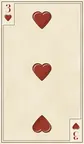
Three of Hearts meaning in cartomancy
3♥︎ · 3 of Hearts · Hearts · shared affection · emotional choice · creativity · divided attention
How it is read
Compared with the Ace of Hearts, linked in some cardology traditions to a strong need for love, this card emphasizes exploring and sharing affection rather than concentrating it. In cartomancy, the Three of Hearts is read as emotional expansion, sociability, and creative expression: a friendship becoming closer, a lively gathering, or renewed interest in making something together. Readers take it as affection finding more outlets, whether through people, hobbies, or a shared project that gives everyone a reason to stay involved. The practical question is where that wider circle adds enjoyment and where it starts competing for attention.
Traditions disagree about which side deserves emphasis: some favor celebration and companionship, while others foreground romantic indecision or a third person. With supportive surrounding cards, readers take it as the pleasure of inclusion, such as friends helping organize a move or someone inviting a partner into an established social circle. Beside difficult Spades, the reading often shifts toward divided loyalties, jealousy, or a conversation about commitment that keeps being postponed. Read the particular neighboring cards and the spread position before choosing between shared happiness and emotional complications; the useful distinction is whether attention is being shared openly or pulled in conflicting directions.
Reading this card for a question of your own? New customers get 5 minutes with a live reader for $1 →
In love
In a relationship spread, the Three of Hearts is read as enjoyment of each other's company, affection expressed socially, and room for shared interests. For someone dating, readers take it as the pleasure of getting acquainted through friends, casual invitations, or conversations that move easily between flirting and friendship. In an established relationship, it can be read as connection through a hobby, a pet, or time spent with people both partners enjoy. Other traditions emphasize indecision and romantic competition, especially beside difficult Spades, so the question becomes whether everyone understands the arrangement. A postponed conversation about exclusivity is a more useful focus than automatically assigning the role of rival to a particular person.
Money and work
For money and work questions, the Three of Hearts is read as creative talent, enjoyment in collaboration, and help through personal connections. Readers might explore a friend's advice about a job offer, a team project built around complementary skills, or the appeal of earning through artistic work. Its less settled reading concerns scattered interest: several attractive projects can leave the practical conversation about fees, responsibilities, or deadlines unfinished. Some traditions also associate it with a project's satisfying completion, which makes it useful for examining what the people involved actually count as success. With Clubs or Diamonds nearby, readers often emphasize constructive participation rather than the emotional complications foregrounded in relationship readings.
Yes or no?
Yes · by the color rule (red for yes, black for no): yes
The Three of Hearts is read as yes, particularly for questions about joining in, expressing affection, or trying a shared creative activity. That interpretation agrees with the common color rule assigning yes to red cards and no to black cards. Where the question concerns exclusive commitment, readers give more weight to neighboring cards because this card also has a tradition of emotional indecision.
Prefer to ask with tarot? Pull a yes or no card here.
As a birth card
The Indecision in Love Card is read as a curious, change-seeking personality, quick to find something appealing but less comfortable settling on a preference. Readers describe people with this birth card as charming, creatively inclined, and capable of working hard when their interest holds. Traditions differ over the restless streak: some emphasize healthy exploration, while others stress confusion and dissatisfaction even when a choice suits them. In everyday life, that pattern might show in drawing a newcomer into conversation or enthusiastically planning a weekend outing, then reopening the decision when another destination catches their attention. The strength is willingness to explore; the sticking point is keeping every possibility available instead of deciding what deserves sustained attention.
Birthdays with this card
- November 30
- December 28
In cardology the card comes from the month and day alone: 55 − (2 × month + day) gives the solar value, and 3 is the Three of Hearts. What playing card are you? Find yours →
Tarot counterpart
Readers who use both decks pair Hearts with Cups, Clubs with Wands, Diamonds with Pentacles and Spades with Swords, the pairing the French occultist Papus already gave. Ace to Ten keep their numbers. On that pairing the Three of Hearts sits where the Three of Cups does. The two decks are read in separate traditions, so the meanings overlap in places and part ways in others.
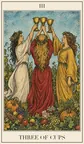 The tarot counterpart: Three of Cups →Hearts pair with Cups. Its upright and reversed meaning, love and yes or no.
Questions
Is the Three of Hearts read as a love triangle?
Some cartomancy traditions read the Three of Hearts as a love triangle, particularly in a relationship spread with Spades nearby. Others emphasize friendship, happiness, and growing affection. Readers working with the triangle interpretation look at jealousy, competing attachments, and unclear agreements as distinct possibilities rather than treating them as interchangeable.
How is the Three of Hearts read as someone's feelings?
Readers take it as pleasure in your company, emotional interest, and enjoyment of the connection. The more hesitant interpretation concerns affection spread across several possibilities. A useful reading separates enjoying time together from readiness to discuss commitment, especially when invitations are frequent but direct conversations remain unfinished.
How do neighboring cards change the Three of Hearts reading?
In the traditions summarized here, Clubs and Diamonds tend to draw attention toward participation, creative activity, or practical support. Spades tend to bring tension and divided attention into focus. Readers then refine that broad suit-level reading using the individual cards and the question assigned to that position in the spread.