☰ Cards, readings & spreads
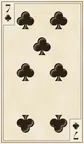
Seven of Clubs meaning in cartomancy
7♣︎ · 7 of Clubs · Clubs · sustained effort · obstacles · small gains · mental pressure · persistence
How it is read
In cartomancy, this card is read as sustained effort under pressure: a difficult task, a position to defend, or progress that takes repeated attempts. The Seven of Clubs is commonly associated with work and mental effort, whether that involves revising an application, sorting out a repair, or returning to a conversation everyone keeps postponing. The emphasis is on the work involved and the resistance encountered, with the surrounding cards helping distinguish a practical obstacle from doubt or hesitation. A useful question here is what actually needs another attempt, and what merely keeps consuming attention.
Traditions disagree about the emphasis: obstacle-centered interpretations foreground defensiveness, while a French cartomancy description is “Small Profit or Pleasure.” The card is also read as increased activity, learning, or changes in a business or social situation, so struggle is only one part of the reading. In a supportive spread, it is read as modest gains tied to practical effort; in a difficult spread, the emphasis shifts toward delays, overthinking, or the strain of holding a position. The distinction matters when reading a delayed project: useful revision and endless reworking can look remarkably similar.
Reading this card for a question of your own? New customers get 5 minutes with a live reader for $1 →
In love
In a relationship reading, the Seven of Clubs is read as effort, defensiveness, or a problem that needs more than one conversation. This interpretation fits a couple repeatedly arguing about household chores, someone guarding their independence, or an apology postponed because neither person wants to speak first. Some traditions emphasize growth through shared difficulties, while others put more weight on being on guard; the surrounding cards help establish which emphasis fits the spread. For a question about someone's feelings, the card is read as guarded engagement or mental preoccupation, prompting the practical question of whether both people are making room for an honest exchange.
Money and work
For money and work, the Seven of Clubs is read as demanding activity, practical obstacles, and the effort involved in securing a modest gain. It fits situations such as correcting an invoice, negotiating a job offer, learning a new process, or handling repairs that take time away from paid work. Profit-centered interpretations focus on the value of that effort, while obstacle-centered interpretations emphasize repeated revisions, competing demands, and a workload that keeps expanding. A useful question is whether another round of work serves a clear purpose: fixing a billing error is different from endlessly polishing a proposal with no agreed deadline.
Yes or no?
No · by the color rule (red for yes, black for no): no
For a direct yes/no question, the obstacle-centered reading leans no: resistance, hesitation, or unresolved work weighs against an affirmative answer. That agrees with the simple color rule, in which black cards answer no. Traditions emphasizing gain sometimes assign a conditional yes or maybe instead, so the reading method should be settled before drawing.
Prefer to ask with tarot? Pull a yes or no card here.
As a birth card
Others often notice a quick, inventive mind that questions accepted explanations and rarely leaves an idea alone. Cardology readers describe this birth card through analytical curiosity, intuitive connections, and a knack for making an unusual perspective interesting to others. That can look like explaining a difficult article through a fresh comparison, then spending the evening researching every unanswered question it raises. The same appetite for understanding can feed worry or make it hard to stop studying when there is already enough information to act. Sources disagree about the preferred route to understanding: some stress skepticism toward religious dogma, others spiritual knowledge, while another reading centers on recognizing the limits of knowledge and achievement.
Birthdays with this card
- March 29
- April 27
- May 25
- June 23
- July 21
- August 19
- September 17
- October 15
- November 13
- December 11
In cardology the card comes from the month and day alone: 55 − (2 × month + day) gives the solar value, and 20 is the Seven of Clubs. What playing card are you? Find yours →
Tarot counterpart
Readers who use both decks pair Hearts with Cups, Clubs with Wands, Diamonds with Pentacles and Spades with Swords, the pairing the French occultist Papus already gave. Ace to Ten keep their numbers. On that pairing the Seven of Clubs sits where the Seven of Wands does. The two decks are read in separate traditions, so the meanings overlap in places and part ways in others.
 The tarot counterpart: Seven of Wands →Clubs pair with Wands. Its upright and reversed meaning, love and yes or no.
Questions
Is the Seven of Clubs a positive or negative card?
Traditions differ: the card is read as gain or satisfaction in some systems and pressure or resistance in others. The useful distinction is between purposeful effort and effort spent defending an unhelpful position. A spread about finishing a repair calls for a different emphasis from one about an argument that keeps circling.
What is the Seven of Clubs read as when asking about someone's feelings?
In a feelings position, the card is read as guardedness, hesitation, or attention occupied by a difficult issue. The question becomes how that pressure affects communication: short replies after a demanding workday and reluctance to discuss a disagreement give the same theme quite different contexts.
How do you read the Seven of Clubs with surrounding cards?
Start with its assigned position in the spread, then use neighboring cards to refine the kind of effort involved. In an obstacle position, the emphasis falls on friction or doubt; in an advice position, it shifts toward persistence or reassessment. Keep the question concrete: what needs fixing, discussing, learning, or setting aside?