☰ Cards, readings & spreads
Nine of Spades meaning in cartomancy
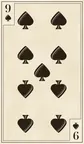
9♠︎ · 9 of Spades · Spades · worry · disappointment · grief · endings · letting go
How it is read
In cartomancy, this card is read as worry, disappointment, grief, and the strain of facing an ending or an unwelcome limit. Readers take it as the difficult part of a situation: the conversation that keeps being postponed, the rejection someone keeps replaying, or the loss that still shapes an ordinary day. Older interpretations emphasize adversity, failure, and suffering, while some contemporary readers put more weight on completion and letting go; these traditions differ in emphasis. The useful starting question is what hurts, what feels blocked, and what has become difficult to keep carrying.
Its position in a spread helps distinguish an actual setback from the fear surrounding one, so a reader looks at the question before choosing between those readings. In a position concerned with thoughts, it is read as doubt or repeated worry, such as lying awake rehearsing a meeting with a manager. In a position concerned with an obstacle, readers take it as a disappointment, delay, or unresolved grief that complicates the next step. Where the reading concerns closure, the emphasis shifts toward acknowledging what has ended, including a plan someone keeps funding after losing interest in it.
Reading this card for a question of your own? New customers get 5 minutes with a live reader for $1 →
In love
In a relationship reading, this card is read as emotional hurt, loneliness, or worry that has become difficult to discuss openly. Readers take it as the strain of an unanswered message, an old argument brought into every disagreement, or a conversation about separation that keeps being postponed. Context shifts the emphasis between grief over a relationship that has ended and distress inside one that still matters to both people. A practical reading asks which concern needs a direct conversation, which disappointment has gone unacknowledged, and whether fear of rejection is shaping how someone interprets their partner's silence.
Money and work
For money and work, this card is read as a setback, a burdensome obligation, or anxiety about whether an arrangement can continue. A rejected job application, a bill left unopened, or a project that absorbs more effort than anyone expected gives the reading a concrete setting. Some readers emphasize failure and delay, while those who stress completion might examine the difficulty of closing a business venture or leaving a familiar role. The useful distinction is between the problem itself and the worry around it: an overdue payment calls for a different response than repeatedly imagining that a job offer has fallen through.
Yes or no?
No · by the color rule (red for yes, black for no): no
For a direct yes/no question, this card is read as no, especially when the question concerns proceeding with something already marked by disappointment, strain, or unresolved obstacles. That reading agrees with the simple color rule in which black cards answer no. Readers can then use the spread to examine the sticking point, such as an unaffordable bill or an agreement nobody wants to discuss.
Prefer to ask with tarot? Pull a yes or no card here.
As a birth card
The reflective helper in a group is a role cardology readers associate with this birth card, combining generosity with a strong need for independence. Readers disagree on the focus: some emphasize service to others, while others center solitude, self-knowledge, and an individual approach to well-being. Organizing a community class or declining a crowded outing for quiet time gives those themes an everyday setting. Readers take generosity and independent judgment as strengths, but being useful can become an identity that is hard to relinquish, such as continuing to run a volunteer group after wanting to leave. Letting go is read as the central challenge, including accepting that stepping back need not erase the value of what someone has contributed.
Birthdays with this card
- January 5
- February 3
- March 1
In cardology the card comes from the month and day alone: 55 − (2 × month + day) gives the solar value, and 48 is the Nine of Spades. What playing card are you? Find yours →
Tarot counterpart
Readers who use both decks pair Hearts with Cups, Clubs with Wands, Diamonds with Pentacles and Spades with Swords, the pairing the French occultist Papus already gave. Ace to Ten keep their numbers. On that pairing the Nine of Spades sits where the Nine of Swords does. The two decks are read in separate traditions, so the meanings overlap in places and part ways in others.
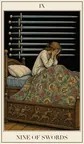 The tarot counterpart: Nine of Swords →Spades pair with Swords. Its upright and reversed meaning, love and yes or no.
Questions
Is the Nine of Spades read as death?
Some older cartomancy interpretations include death among this card's harsh associations, alongside failure, delay, and despair. Other readers emphasize grief, endings, or fear of loss. In a reading about a recent bereavement, that vocabulary can center the discussion on mourning and the difficulty of adjusting to everyday life.
How is the Nine of Spades different from the Nine of Hearts?
Readers often contrast the Nine of Hearts, traditionally called the wish card, with the Nine of Spades as disappointment or being deprived of something wanted. The distinction is between satisfaction and the difficulty of an unmet desire. The question helps identify whether that desire concerns affection, recognition, or a practical goal.
Why do some readers associate the Nine of Spades with letting go?
Some contemporary readers interpret its difficult themes through completion: the effort involved in accepting that something has run its course. More severe traditions retain an emphasis on suffering and adversity. Letting go is therefore one interpretive approach, useful when discussing an abandoned plan or a commitment someone struggles to leave.