☰ Cards, readings & spreads
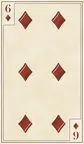
Six of Diamonds meaning in cartomancy
6♦︎ · 6 of Diamonds · Diamonds · fair exchange · financial responsibility · settling obligations · personal values
How it is read
In cartomancy, the card is read as fair exchange, financial responsibility, and the work of settling obligations. Readers take the Six of Diamonds as a prompt to examine who contributes what: money toward rent, time spent helping a friend, or effort devoted to a shared project. The central question is whether the arrangement feels fair to everyone involved, especially when an informal favor has become a regular expectation. A bill awaiting payment or a task repeatedly put off gives this reading a practical focus: what remains outstanding, and what would count as settling it?
Traditions differ in emphasis: some readers stress generosity and reciprocity, while others focus on debts, withheld resources, or an arrangement that has become stuck. Some systems call this “karmic balance”; in an everyday reading, that language can be translated into examining commitments and their consequences. The surrounding cards and the spread position help distinguish willing support from reluctant duty, or steady finances from inertia. Read in an advice position, it invites a concrete review of the agreement: name the obligation, check the terms, and discuss what each person can reasonably contribute.
Reading this card for a question of your own? New customers get 5 minutes with a live reader for $1 →
In love
In a relationship reading, the Six of Diamonds is read as reciprocity: how partners share attention, practical help, expenses, and responsibility. A postponed conversation about household bills or one person always arranging time together gives the reading something specific to examine. Some cartomancy readers associate it with shyness or withdrawal when surrounded by Hearts, shifting the emphasis toward affection that is held back or difficult to express. Rather than treating every uneven contribution as a lack of care, readers use this card to ask whether both people understand the arrangement and whether either feels unable to ask for more support.
Money and work
For money and work, the Six of Diamonds is read as financial responsibility, repayment, and the relationship between effort and compensation. Readers might apply it to a bill that needs a payment plan, a colleague repeatedly covering someone else's duties, or a job offer whose salary deserves a closer look beside its workload. Traditions differ here: some emphasize business success or recognition, while others emphasize financial inertia and obligations that remain unresolved. The practical reading is to check what is owed, what is being offered, and whether the exchange reflects the value of the work, rather than treating a familiar arrangement as automatically satisfactory.
Yes or no?
Yes · by the color rule (red for yes, black for no): yes
The Six of Diamonds is read as a yes when the question concerns a fair agreement, repayment, or accepting a reasonable responsibility. This agrees with the simple color rule many readers use: red answers yes, black answers no. Readers who emphasize reciprocity make that yes conditional on the terms being balanced, so a question about sharing costs calls for checking the actual agreement.
Prefer to ask with tarot? Pull a yes or no card here.
As a birth card
The trusted adviser in a family or workplace is the role cardology readers describe for this birth card: thoughtful, dependable, and clear about personal values. Readers take it as a temperament suited to teaching and counsel, whether patiently walking a coworker through an unfamiliar task or helping a relative sort through a difficult choice. The same steadiness can settle into inertia: someone capable of guiding others may keep postponing a change in their own routine. Accounts disagree on ambition, with some praising determined achievement and others treating the pursuit of more as a source of discontent. The useful tension is between honoring commitments and recognizing when a familiar way of doing things has stopped being satisfying.
Birthdays with this card
- January 21
- February 19
- March 17
- April 15
- May 13
- June 11
- July 9
- August 7
- September 5
- October 3
- November 1
In cardology the card comes from the month and day alone: 55 − (2 × month + day) gives the solar value, and 32 is the Six of Diamonds. What playing card are you? Find yours →
Tarot counterpart
Readers who use both decks pair Hearts with Cups, Clubs with Wands, Diamonds with Pentacles and Spades with Swords, the pairing the French occultist Papus already gave. Ace to Ten keep their numbers. On that pairing the Six of Diamonds sits where the Six of Pentacles does. The two decks are read in separate traditions, so the meanings overlap in places and part ways in others.
 The tarot counterpart: Six of Pentacles →Diamonds pair with Pentacles. Its upright and reversed meaning, love and yes or no.
Questions
Why is the Six of Diamonds associated with karmic debt?
Some cardology traditions use “karmic debt” for this card's themes of responsibility and completing obligations. Readers working with that vocabulary connect material debts with broader questions of fairness and values. In a practical spread, the discussion can center on an unfinished commitment, such as returning borrowed money or completing work already paid for.
How is the Six of Diamonds read next to Hearts?
In one cartomancy tradition, readers take this combination as shyness, withdrawal, or withholding. A relationship question might then turn toward the invitation someone hesitates to send or the concern they keep avoiding. Other readers retain the emphasis on give-and-take, so the chosen reading method matters.
Is the Six of Diamonds read as a pay raise?
Some cardology readers associate it with a pay raise or promotion, while others emphasize managing obligations. In a work spread, readers can use that association to examine recognition and compensation. A review meeting, an expanded role, or a salary discussion gives that interpretation a concrete setting.